Environmentally Concerned Citizens of South Central Michigan


-000000

ECCSCM meetings - 3rd Wednesday every month, Hudson Community Center, 7:30 p.m.
Email us: contact-us@nocafos.org
Winter 2009 ECCSCM Newletter (pdf file)

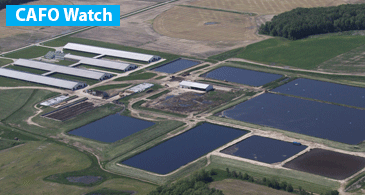
In the last few years, 12 livestock factories, most of them dairies, have been built near the town of Hudson, Michigan.  Large livestock operations that confine animals year-round are called Confined Animal Feeding Operations (CAFOs).

Environmentally Concerned Citizens of South Central Michigan (ECCSCM) developed this website to provide information on the pollution and the damage CAFOs have caused in our community and its watersheds, and to promote Sustainable Alternatives (buy local food & pasture-based meat--see sources). We support vanguard, responsible agriculture, farming that looks ahead to the next generations, preserves biodiversity, raises animals in a healthy environment, does no harm to its neighbors, enhances the natural assets of living communities, and protects our natural resources -- air, soils, groundwater, streams, and lakes.

As family farmers and neighbors, we believe agriculture must take responsibility for its actions in rural communities. CAFOs have failed us. They have damaged our farming communities, degraded our natural resources, and polluted our watersheds.

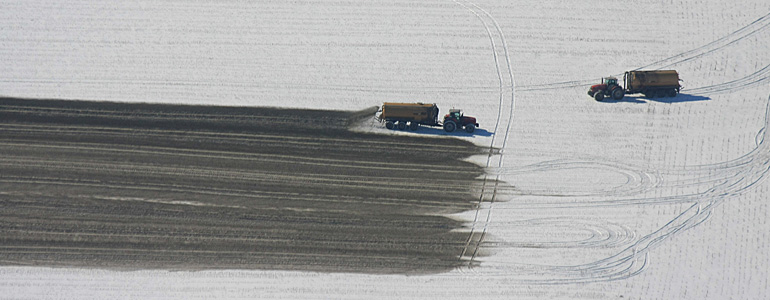
spray snowspraylight
STENCH/EMISSION ALERTS!

formNEW: Spring Newsletter (pdf, 1MB)

MANURE EMISSIONS INCIDENT REPORT -- ONLINE FORM
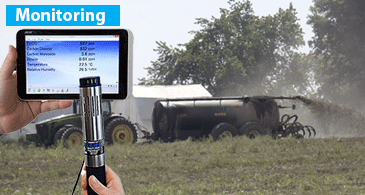
ONLINE FORM: If manure emissions are making you sick, changing your daily activities, report your distress to ECCSCM on this form. We'll keep a log of health impacts from CAFO emissions and let agencies and legislators know where the health Hotspots are.

OR ORDER the print version, our MANURE EMISSIONS LOG BOOK, which you can mail back to us. Send us your name and address, and we'll mail you a copy:
ECCSCM, P.O.Box 254, Hudson, MI 49247 or contact-us@nocafos.org
logbook


BULLETINS: (last few months only -- for full list see News page)

2009

June 24 - The Michigan Supreme Court ruled that the public has the right to know what CAFOs do with their millions and millions of gallons of manure. CAFOs' Comprehensive Nutrient Management Plans (CNMPs) will now be submitted with their pollution control NPDES permits and will be available to the public, following a Sierra Club suit that argued the same information is required and is public in all other industrial and manufacturing NPDES permits.

May 18 - Vreba-Hoff paid its $223,500 fine (see April 16 below); Vreba-Hoff still owes $180,000 in fines, due when the EarthMentor "treatment" system is certified as operating as designed. Vreba-Hoff says it's working fine, but ... why haven't they got the certification?

May - Livestock found to be the main source of E. coli in Lake Huron. After years of arguments over where the disease-carrying bacteria come from -- humans, livestock or wildlife -- DNA "fingerprinting" says human sewage is only a tiny fraction of the problem. Manure from cattle and pigs far outweighs human sewage as the source of E. coli pollution in Lake Huron, says a new Canadian study, published in the March issue of the Canadian Journal of Microbiology. See article in Ottawa Citizen (May 5, 2009) or read the abstract or full scientific study, "(REP)-(PCR) analysis of Escherichia coli isolates from recreational waters of southeastern Lake Huron" in the March issue of Canadian Journal of Microbiology.

April 16 - Vreba-Hoff orderd by 30th Circuit Court to pay $223,500 in fines no later than May 18 (see entry Feb. 3 below -- Vreba-Hoff's motion for "relief" was dismissed by Judge James R. Giddings.

April 13 - Leonidas, St. Joseph County - Vreba-Hoff-developed Bustorf Dairy permit is being appealed by Society for Protecting Environmental Assets. DEQ initially denied a permit for the proposed 2260-cow dairy, then granted the permit in March. See article in Kalamazoo Gazette.

Feb 3 - update on ongoing Vreba-Hoff lawsuit: Michigan Attorney General files a motion in 30th Circuit Court for Summary Disposition, asking the court to rule that Vreba-Hoff's undisputed fines are "due and owing immediately" to the State of Michigan. Vreba-Hoff had requested "relief" from paying its $400,000+ fines until it could add more cows to produce more income. The Attorney General's brief concludes: "Perhaps what is most ironic about Vreba-Hoff's objection and requested relief is the fact that the reason for the lawsuit in the first place was because of Vreba-Hoff's inability to properly treat or otherwise control the vast amount of agricultural waste generated by over 6,000 cows. Rather than reduce or eliminate the source of the waste, Vreba-Hoff is requesting to add even more cows, with the 'hope' that the treatment system (which has failed to meet the agreed upon standards) will somehow work as originally represented sometime in the future... MDEQ has no confidence in Vreba-Hoff's projections or abilities, and merely asks compliance with the negotiated agreements." (Brief in Support of Motion for Summary Judgment, MDEQ vs. Vreba-Hoff Dairy LLC, 30th Circuit Court, Feb 3, 2009)

December 31, 2008 - Year's tally of offenses, degradation: 65 violations and unlawful discharges confirmed by DEQ from CAFOs in our area during 2008. 343 confirmed violations since 2000. (See details of these violations)

2 RECENT REPORTS DOCUMENT RISKS, COSTS OF CAFOS:
1)POLLUTION, DISEASE RISKS FROM CAFOS.
2-yr study by the Pew Charitable Trusts and the Johns Hopkins Bloomberg School of Public Health cite risks from the huge amount of animal waste industrial farms generate, use of antibiotics by such facilities leading to the development of drug-resistant bacteria and the high concentration of animals on industrial farms increasing the risk of disease spreading. The report recommends phasing out the most inhumane production practices within 10 years; implementing federal performance-based standards to improve animal welfare; and expanding and reforming animal agriculture research. See the summary and full report.

2) CONFINED ANIMAL FEEDING OPERATIONS COST TAXPAYERS BILLIONS
. The Union of Concerned Scientists calls for POLICIES THAT REDUCE CAFO SUBSIDIES AND ENCOURAGE MODERN, SUSTAINABLE MEAT, MILK AND EGG PRODUCTION. See "CAFOs Uncovered: The Untold Costs of Confined Animal Feeding Operations" for details of the policies that have allowed CAFOs to dominate U.S. meat and dairy production. "CAFOs aren't the natural result of agricultural progress, nor are they the result of rational planning or market forces," said Doug Gurian-Sherman, a senior scientist in UCS's Food and Environment Program and author of the report. "Ill-advised policies created them, and it will take new policies to replace them with more sustainable, environmentally friendly production methods."

50 lagoons in our area
approx. 134,696,000 gallon capacity

Vreba Hoff I - 5 lagoons - 44,200,000 gal. (actual)
Vreba Hoff II -4 - 29,690,000
(actual)
Hartland Farms - 4 - 5,264,000
(3,264,000 actual, est; 2,000,000 for new lagoon)
Stutzman - 1
Hoffland Dairy- 3 - 9,723,975
( actual)
Bleich Dairy - 3 - 4,126,000
(3,126,000 actual; est. 1,000,000 for new lagoon)
Bruinsma Dairy - 5 - 12,500,000
(actual)
Mericam/Waldron Dairy - 2- 8,400,000
(actual)
Flevo Dairy - 8 - 20,791,500 
(actual)
State Line Farms - 6
Marvins - 2
Stoutcrest- 3

data assembled from CAFOs' CNMPs, 2007

See animation on livestock factories, The Meatrix! And now, The Meatrix II: Revolting (on dairy CAFOs)

Living a Nightmare: Animal Factories in Michigan
click for more information and order form

What are CAFOs?
Dairy CAFOs confine 700 or more cows, often several thousand cows, in long steel barns, year-round. CAFO cows never graze. CAFOs look like factories, and they are -- animal factories.


One cow produces more than 20 times the waste a human produces. Waste from 10,000 CAFO cows in this small area = untreated waste of a city of 200,000 people.

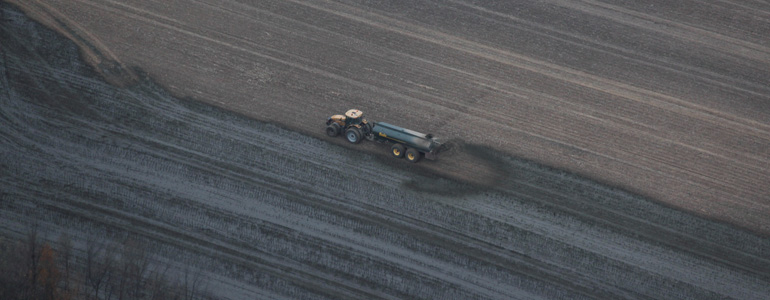
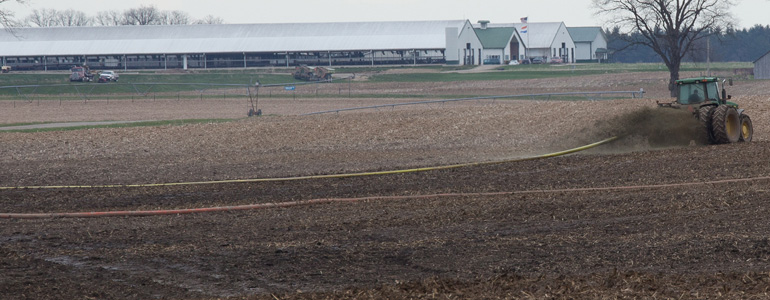
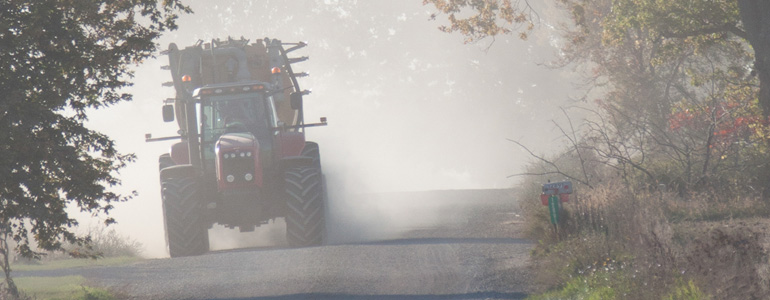
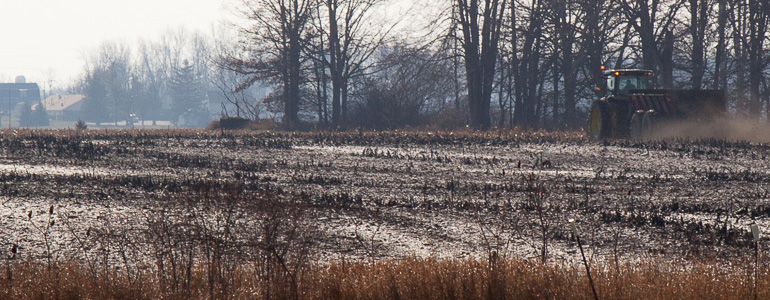
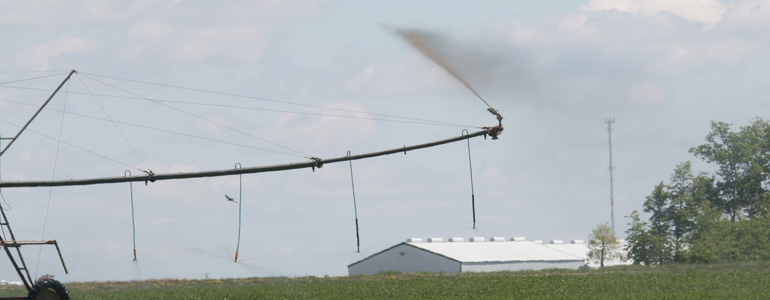
Untreated CAFO waste is liquified with clean groundwater -- instantly polluted -- then pumped to cesspits or holding "lagoons" until it is pumped again and injected or sprayed onto fields around Hudson (pop. 2500). Some manure makes good fertilizer. But too much manure, especially the liquid manure from CAFOs, is a major pollutant of soils and waterways. Animal manure and and animal carcasses contain many pathogens (disease-causing organisms such as Cryptosporidium, E. coli bacteria, Listeria -- see a comprehensive list of pathogens and symptoms posted by the Environmental Protection Agency.). These pathogens can threaten human health, other livestock, aquatic life, and wildlife when introduced into the environment.

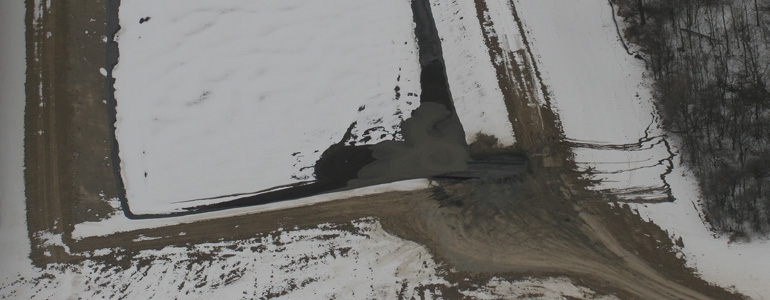
When liquid manure enters streams or lakes, it is called a discharge. Discharges that violate Michigan's water quality standards are illegal.

CAFOs in this area, all of them, have discharged illegally. Since 2000, there have been 364 violations and discharges, many of them multiple-day violations, confirmed by the Michigan Department of Environmental Quality in the Hudson area (see violations list). A 100% failure rate in pollution prevention.

    We call for a moratorium on new and expanding CAFOs.
    We call for an end to factory farming as a means of food production.

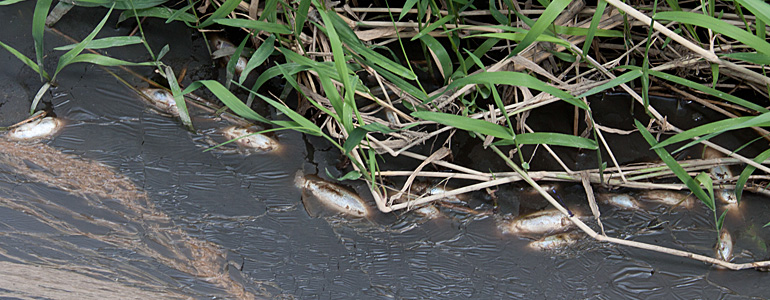
On the Local Pollution pages, look at what we see around here every day -- waste-polluted water, silage leachate runoff, drainage tile discharges, the destruction of vegetation along streams, violations of manure management practices. Too bad the photos aren't Scratch & Sniff!

CONTACT INFO if you notice CAFO POLLUTION

Air Pollution
(stench, strong odors)
call DEQ Air Division, Jackson Dist: 517-780-7898

Water Pollution (runoff from fields, discolored stream, water with odor)
call DEQ Water Division, Jackson Dist: 517-780-7841 or 517-780-7917

or 24-hr DEQ PEAS (Pollution Emergency) Hotline: 1-800-292-4706

or contact ECCSCM and we will report the pollution: contact-us@nocafos.org


 ECCSCM, P.O.Box 254, Hudson, MI 49247
 contact-us@nocafos.org
To become a member of ECCSCM
click here